What Really Costs More - Acquiring a New Customer or Losing an Existing One?
Advertising, sales efforts, meetings, and contract negotiations are all investments that can be planned and measured. Yet in the long run, losing an existing customer often costs far more.
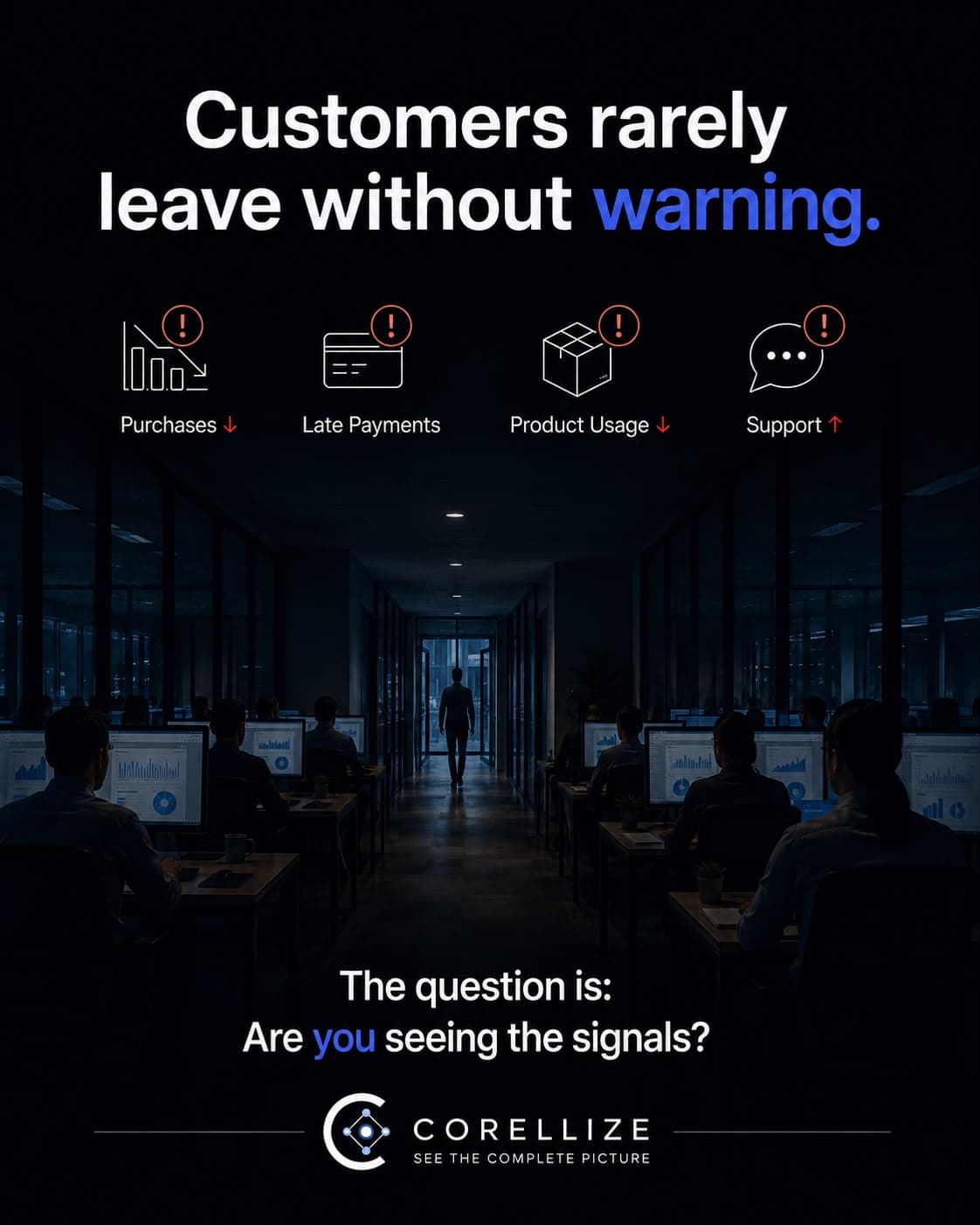
Advertising, sales team efforts, meetings, proposals, and contract negotiations all require investments that businesses can plan, measure, and optimize.
That's why many organizations assume that customer acquisition represents their biggest cost.
In reality, losing an existing customer often costs far more in the long run.
The reason is simple.
When a customer leaves, the business loses more than future revenue. It also loses the time, money, and effort already invested in building that relationship. Replacing a single lost customer means starting the entire process again - investing in marketing, sales activities, meetings, negotiations, and closing a new deal.
A new customer also needs time to develop trust in your business. An existing customer has already done that.
Despite this, companies tend to measure customer acquisition costs with great precision, while far fewer calculate the true cost of losing an existing customer.
This isn't just an assumption. Research by Bain & Company, cited by Harvard Business Review, found that increasing customer retention by just 5% can increase profits by 25% to 95%. The impact comes from repeat purchases, lower service costs, and stronger long-term customer relationships.
Business growth depends on both acquiring new customers and retaining existing ones.
The Real Cost of Losing a Customer
The cost of losing a customer extends far beyond lost revenue.
It includes:
- the cost of acquiring a replacement customer;
- the loss of Customer Lifetime Value (CLV);
- the time your sales team spends rebuilding the pipeline;
- the missed opportunities to strengthen relationships with customers who already know and trust your business.
As a result, more organizations are treating customer retention as a long-term business investment rather than simply a customer service objective.
Conclusion
Winning new customers will always be essential for growth.
However, long-term success depends not only on how many new customers a business acquires, but also on how effectively it retains the ones it already has.
Every retained customer allows a business to build on the investment it has already made. Every lost customer means that part of that investment must be made all over again.
Perhaps it's time for every business to ask one simple question:
Are we measuring the cost of losing customers as carefully as we measure the cost of acquiring them?
Sources
- Harvard Business Review - The Value of Keeping the Right Customers
- Bain & Company - Loyalty Rules!
Ready to automate your sales process?
Let's map your workflow and identify where automation creates the fastest measurable impact.
Book a Call