How Can Companies Share Data Without Losing Control of It?
Once a file leaves your system, the file itself has little ability to determine what happens to it next. The question is whether that has to be true.
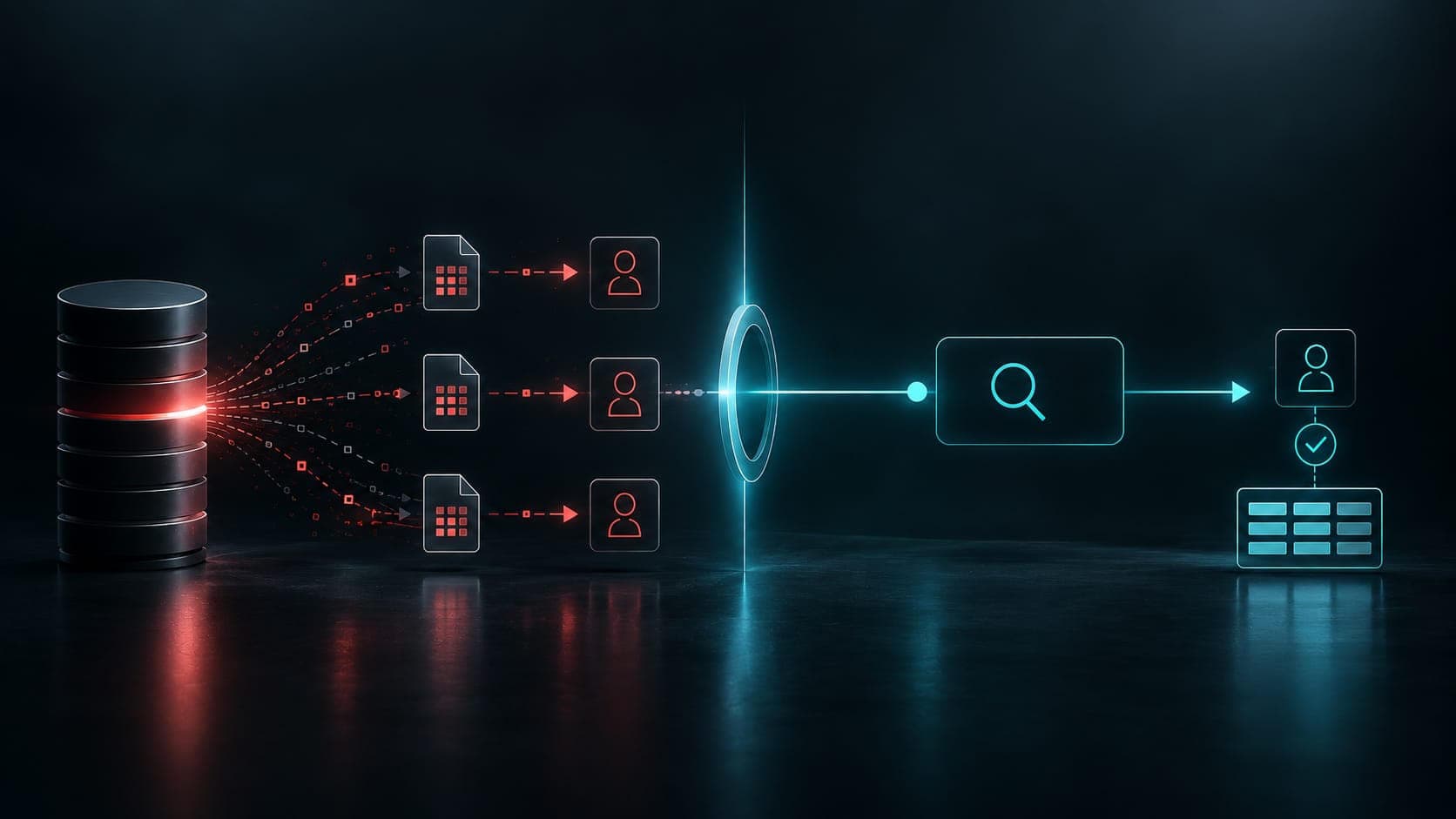
The email had one attachment and took four seconds to send.
In those four seconds, a full year of pricing data went from information the company directly controlled to another copy sitting on someone else's system.
Nothing about that transfer was unusual. It's how companies share information with suppliers, auditors, and business partners every day.
The more important question is what happens to control once the data has left the company's systems.
Why Does Sending Data Mean Giving Up Control?
Once a file leaves your system, the file itself has little ability to determine what happens to it next.
A contract can require the recipient to delete it after use, not forward it, or stop using it after a project ends. The contract creates an obligation. The file remains a copy.
A finance team sending a pricing sheet to a supplier or an operations team providing production data to an auditor isn't doing anything careless. Traditional file sharing simply relies on the recipient managing that copy according to the agreed terms.
That approach works as long as trust is enough.
The challenge grows when the data becomes more sensitive, the number of partners increases, or the company needs greater control over who can access the information and how it is used.
What Does Sharing Look Like When the Data Stays Where It Is?
The alternative can be to change what gets shared.
Instead of sending an entire dataset, a company can provide an authorized partner with controlled access to the information needed for a specific purpose:
- A supplier may need today's price for one product.
- An auditor may need access to the specific operational records required for an audit.
This is where federated data sharing becomes relevant.
The basic idea is to enable organizations to use data across organizational boundaries while allowing the data owner to retain control over how and under what conditions that data is accessed. The International Data Spaces framework is built around principles such as data sovereignty, identity, authorization, secure exchange, and interoperability.
This is also the principle behind how Corellize approaches data and process intelligence: before creating another copy of the data, we look at whether the information can be connected, analyzed, and used where it already exists. The goal isn't to move more data simply because a system can. It's to make the right information available for the decision that needs to be made.
The distinction matters: The goal is to make the right data available for the question that needs to be answered, while keeping the data under the appropriate control.
That changes the risk.
Why Does This Matter When Companies Already Have So Much Data?
The amount of data companies hold is growing faster than their ability to turn it into practical value.
The World Economic Forum has reported that around 97% of hospital data remains unused, highlighting the amount of potentially valuable information that remains outside practical use.
A similar challenge appears across other industries:
- A manufacturer may have production data that could help a supplier improve quality.
- A financial institution may hold information that could help a partner identify a risk earlier.
- A logistics company may have operational data that could improve planning across a supply chain.
In each case, the organization wants the benefits of sharing while retaining appropriate control over its data.
Federated approaches can allow data to remain with its owner while authorized participants access or process it under agreed conditions. This is a core principle of data spaces designed around data sovereignty and trusted data sharing.
Why Does This Only Work at Scale With Open Standards?
Building one controlled connection with one supplier is a manageable technical project. Building a separate custom connection for every supplier, auditor, customer, and partner is a different problem.
The complexity grows with every new relationship.
Open standards help reduce that complexity by establishing common ways for participants to identify each other, exchange information, and create trusted data-sharing relationships. This allows a new partner to follow an established integration pattern instead of starting from scratch each time.
That matters particularly in manufacturing, where multiple companies need to exchange operational information while protecting intellectual property and retaining control over their data. The International Data Spaces approach is designed to support secure, standardized data exchange across organizational boundaries.
So: How Can Companies Share Data Without Losing Control of It?
By changing what they mean by "sharing data."
Sometimes the right answer is still to send a file. But when a recipient only needs specific information, controlled access can provide the required information without creating another permanent copy of the entire dataset.
Federated data sharing takes this idea further: data can remain with its owner while authorized participants access or process it through standardized and controlled mechanisms. Access rights, identity, authentication, usage policies, and activity records become part of the data-sharing architecture itself.
The distinction is simple:
- Sending a copy transfers information to another system.
- Controlled access can preserve more of the owner's control over how that information is used.
The next time someone asks for a file, it's worth asking a different question:
Does the partner actually need the whole dataset - or just the answer to one question?
Related posts
Can Your Data Become a Revenue Stream?
Your data may be valuable because of what it contains. But its commercial value can also come from what it can reveal - without handing over the records themselves.
Read moreData & StrategyWhy Do Companies Still Make Decisions With Data They Don't Fully Trust?
Every system can appear correct on its own while the combined picture describes a very different reality. The question is which data can be trusted for a specific decision.
Read moreReady to automate your sales process?
Let's map your workflow and identify where automation creates the fastest measurable impact.
Book a Call